How Do Sliding Door Rollers Affect Smoothness and Noise Over Repeated Use?
-
 admin
admin - 02 Oct, 2026
A sliding door can feel excellent on installation day and become rough or noisy months later. The rollers often explain the change. Sliding door rollers carry the panel and influence how easily it starts, travels, and stops. Wheel material, bearing quality, alignment, and load rating all affect long-term movement.
For project buyers, the useful question is whether the door keeps a steady rolling feel after repeated use. Roller selection therefore depends on materials, track matching, installation accuracy, and service access.
Why Repeated Use Changes Smoothness and Noise
Every cycle creates contact between wheels, axles or bearings, tracks, guides, fasteners, and the door panel. Small errors that are hard to notice at first can become obvious over time. A slightly misaligned track may wear one side of a wheel. Dust can raise rolling resistance. A loose hanger may start to rattle.
Rolling Resistance and Alignment
Smooth travel depends on even load sharing. If one hanger carries too much weight, the wheel can deform, the bearing may wear faster, and the panel can tilt. Track straightness matters too. Burrs, dents, poor joints, or a rail that is not level can turn each pass into a small bump.
Stable guides keep the door from swinging sideways. When wheel shape, hanger position, and track alignment stay consistent, the user feels one continuous glide.
Where Noise Starts
Noise is usually vibration becoming audible. Hard contact at the wheel-track interface can pass vibration into the rail, wall, frame, and door panel. Bearing play may add clicking; worn wheel surfaces may create a repeating hum; loose fasteners can produce rattle.
Quiet sliding door hardware is therefore a system issue. Wheel tread, bearings, track surface, guides, stops, and soft-close control all contribute.
Material Choices That Shape Long-Term Performance
Roller materials must balance quiet movement, load capacity, wear resistance, and dimensional stability. A soft wheel that works well under a light wardrobe panel may not suit a heavy architectural door. Buyers should compare the roller and track together, because the same wheel can behave differently on another rail profile.
Polymer Wheels, Bearings, and Axles
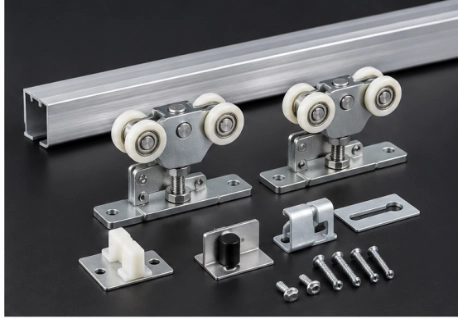
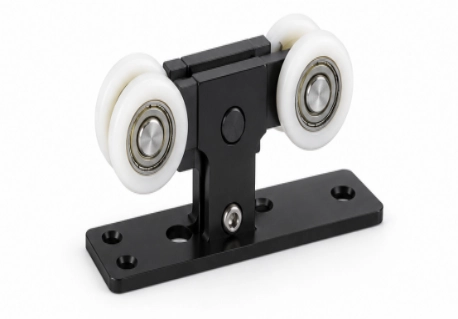
Engineering polymers such as nylon are common roller materials because they can reduce harsh metal-on-metal contact. Yet wheel geometry and load remain critical. Excess load can cause tread wear or deformation, especially when the door rests in one position for long periods.
Bearings or bushed axles reduce friction at the wheel center. Once looseness develops, the door may still move but can sound rougher and feel less controlled. Steel hanger plates and axles add strength, but they should hold the wheel square to the running surface.
Steel and Aluminum Tracks
Steel tracks provide stiffness for many interior sliding systems. Aluminum tracks are lighter, resist corrosion well, and can be formed into precise profiles for pocket or concealed doors. Neither material is automatically quieter. Surface finish, rail shape, mounting, and roller material affect vibration.
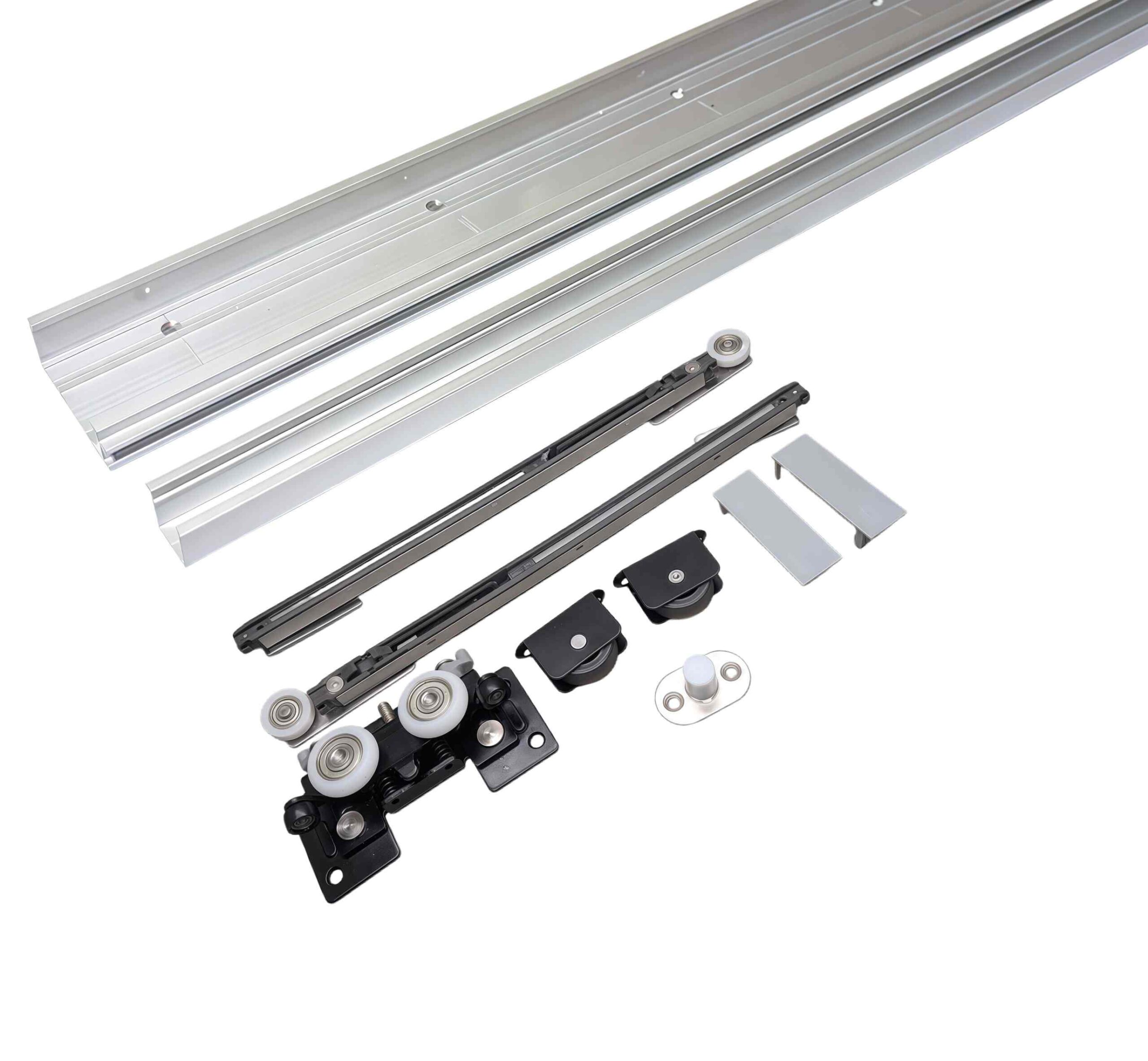
At INT-FORCE, we design sliding and folding hardware around door weight, track geometry, adjustment, and repeated movement rather than appearance alone. Our sliding door hardware range includes by-pass systems with steel tracks, while selected pocket and hidden systems use aluminum track designs.
Core Advantages of a Well-Matched Roller System
A well-matched roller system improves daily use and reduces faults that often lead to service calls:
- Lower starting force, so the panel begins moving without a hard pull.
- More even travel, with less binding, dipping, or side movement.
- Lower operating noise because rolling contact creates less vibration.
- More reliable soft-close action at normal opening and closing speeds.
- Less wear on tracks and guides when the roller is correctly rated.
- Better perceived quality because movement stays light and controlled.
The highest load rating is not always the best choice. The roller should match the real panel weight, thickness, track profile, and expected use.
Roller Types Across Common Sliding Door Systems
Different door types place different demands on rollers. A closet by-pass door may be light but used often. A pocket door hides moving parts inside a wall, making later service less convenient. Barn and hidden sliding doors may carry larger panels, while bi-fold systems add changing angles as the panels fold.
By-Pass, Pocket, and Hidden Sliding Doors
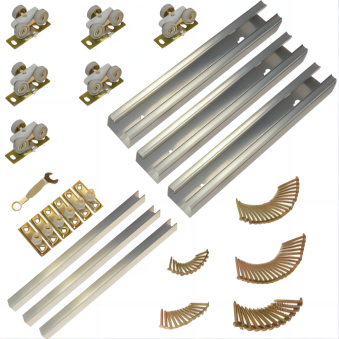
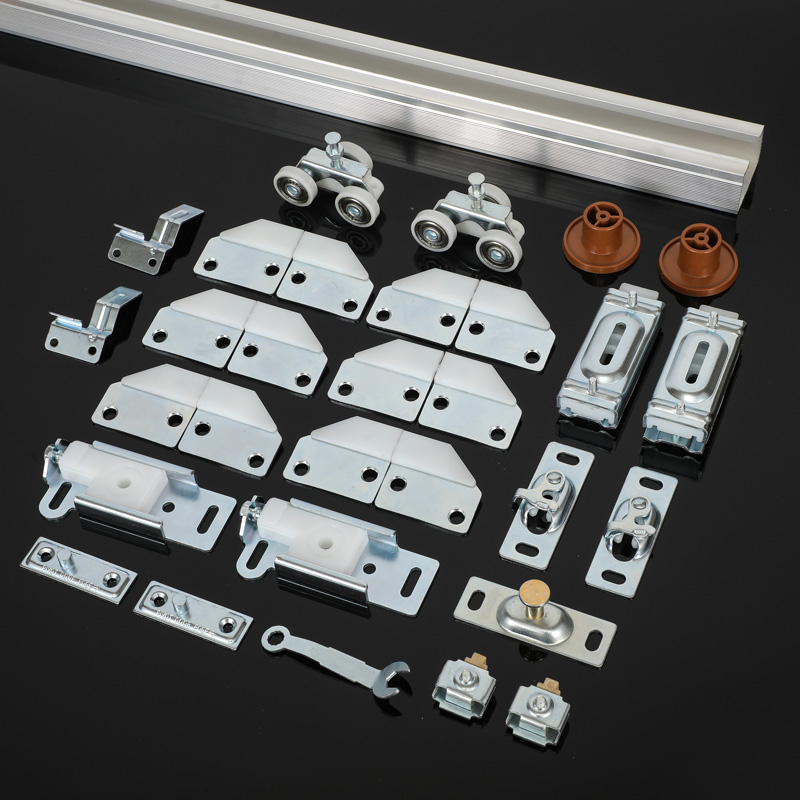
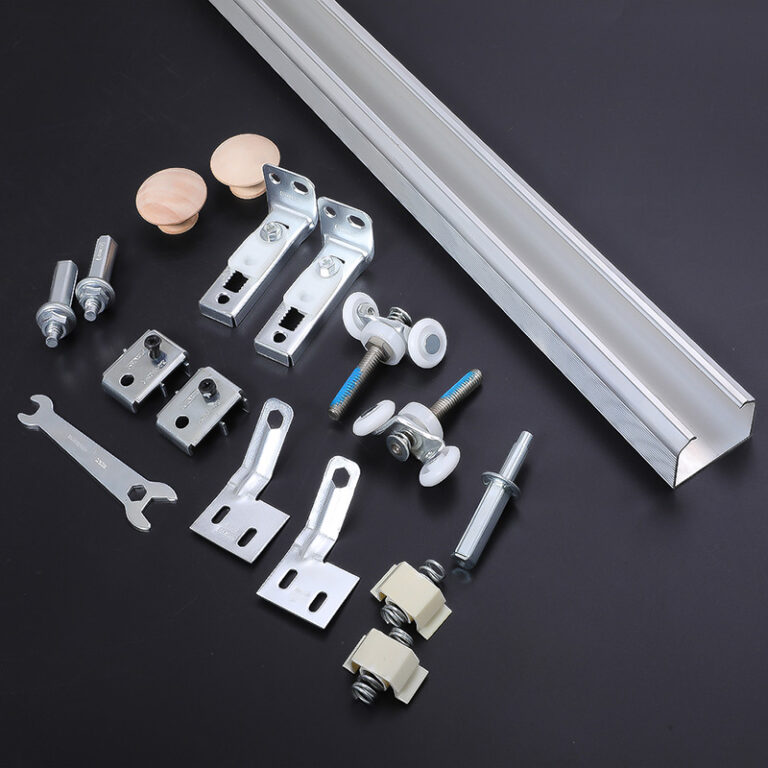
By-pass doors use parallel tracks so panels can pass one another. Adjustable hangers help installers correct small differences in the opening and panel position. Our INT-FORCE sliding door range includes 60 lb class two-door kits for this type of application.
Pocket door hardware needs dependable rollers because much of the mechanism sits above or inside the wall. Our current range includes a heavy-duty 400 lb system with an aluminum track. Hidden barn door systems place similar value on accurate guidance and concealed motion, especially when visual simplicity is part of the design.
Barn and Bi-Fold Door Hardware
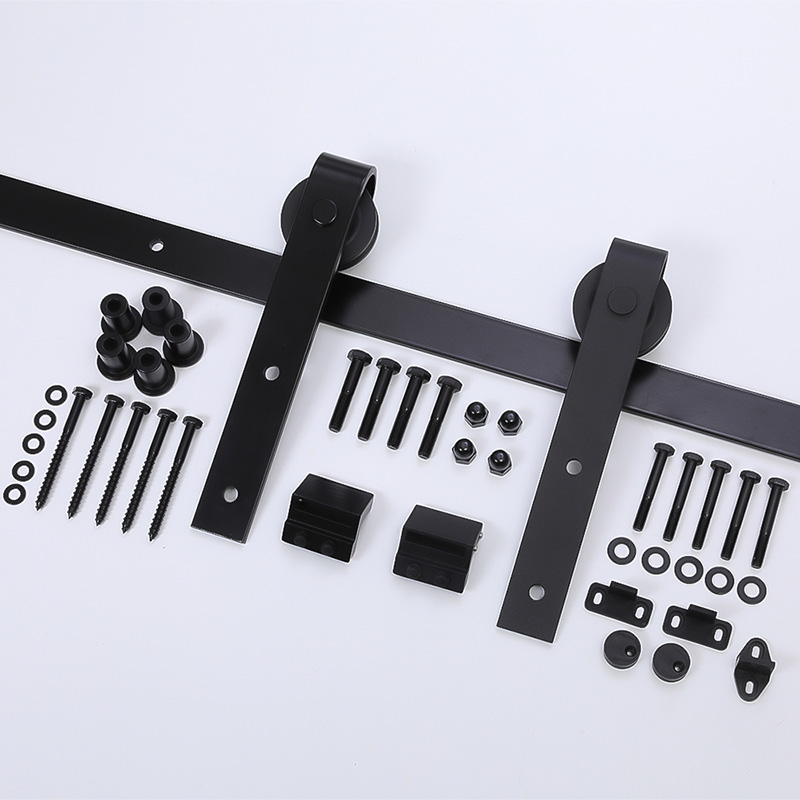
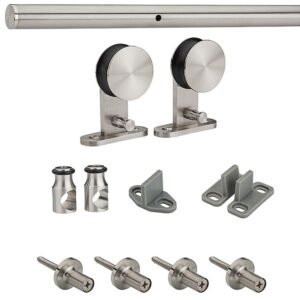
Barn door rollers travel on an exposed wall-mounted rail, so track condition and wheel alignment are easy to notice. Heavy panels also place more force on hangers and wall fixings. Bi-fold door hardware behaves differently: panels fold while moving, so pivots, guides, and rollers must manage changing side loads together.
For buyers comparing barn door hardware or bi-fold door hardware, door thickness, panel count, opening width, and rated weight should be checked before finish or style.
Where Smooth, Quiet Rollers Matter Most
Repeated-use performance matters where doors open frequently or noise affects comfort. Common applications include apartments, hotels, offices, meeting rooms, retail stores, wardrobes, storage systems, and light commercial spaces.
In bedrooms or hotels, rattling is easy to notice at night. In offices, rough movement can interrupt meetings. In retail, movement quality affects customer experience. These applications favor stable guidance and low friction.
Recent Door Hardware Trends Put More Attention on Movement
Current hardware discussions increasingly focus on concealed mechanisms, soft-close motion, acoustic comfort, and longer service life. When a track disappears into a wall or ceiling, users notice drag, rattle, and impact more quickly.
Concealed systems and soft-close control. Minimal interiors continue to support interest in hidden sliding systems and pocket doors. Soft-close devices are also common because they slow the panel before it reaches the stop, reducing impact. A damper, however, cannot correct a poor roller path.
Smooth rollers give the closing device a more predictable speed to control, which helps the whole door feel calmer and more deliberate.
Durability and testable performance. Long-term movement is also becoming a clearer purchasing requirement. ANSI/BHMA A156.14-2024 covers sliding and folding door hardware performance areas such as cycle testing, durability, smoothness, static load, and friction. The practical lesson is simple: repeated movement should be checked, not assumed.
Ask suppliers how rollers, tracks, hangers, guides, and closing parts are tested together. A system may support its rated static load but still disappoint if friction rises quickly or adjustment does not remain stable.
How Buyers Can Evaluate Sliding Door Rollers Before Ordering
A practical sample test can reveal more than a specification sheet. Use a representative door panel and repeat the test under the same installation conditions.
- Match the sample to the real door weight, thickness, and opening width.
- Check starting force and running feel at several track positions.
- Listen for repeating clicks, hum, rattle, or impact at the stops.
- Cycle the door, then inspect wheel play, fasteners, track marks, and alignment.
- Add the planned soft closer and confirm reliable engagement at normal user speeds.
- Confirm whether rollers and soft-close parts can be adjusted or replaced without major wall removal.
This approach compares total system behavior rather than one component by price.
Conclusion
Sliding door rollers directly affect how a door feels and sounds after repeated use. Wheel material can soften contact, bearings can reduce friction, and a well-formed track can keep movement steady, but these parts only work well when the load is shared correctly and the installation remains aligned. For buyers, the useful question is not “Which roller is quietest?” It is “Which complete roller-and-track system stays smooth at my door weight and usage level?” Current demand for concealed hardware, soft-close motion, and cleaner interiors makes that question more important. A realistic sample test, suitable load rating, and serviceable hardware choice can reduce noise, limit binding, and keep the door pleasant to use for longer.
FAQs
Q: Why do sliding door rollers become noisier over time?
A: Wear, dust, loose fasteners, damaged wheel surfaces, or track misalignment can increase vibration and rolling noise.
Q: Are polymer sliding door rollers quieter than metal rollers?
A: Often, but load, bearing design, track finish, and alignment matter more than wheel material alone.
Q: How much door weight can INT-FORCE sliding hardware carry?
A: Current products include about 27 kg systems and heavy-duty options around 181 kg, depending on the application.