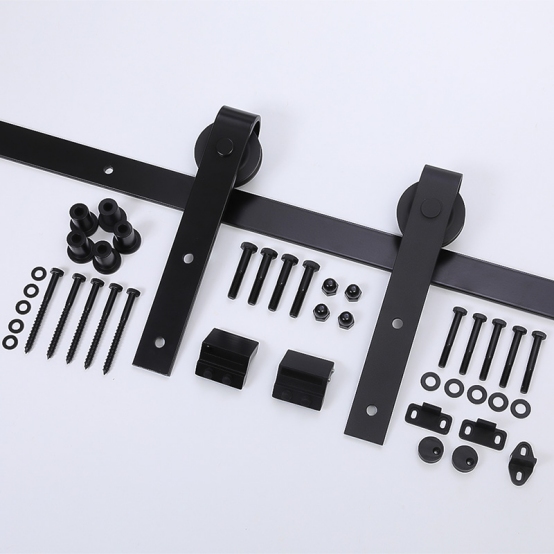
What Wear Signs on Door Tracks and Rollers Suggest Maintenance or Replacement Is Due?
-
 admin
- 19 Nov, 2026
A sliding door rarely fails without warning. Long before it stops moving, it may grow louder, feel heavier, drift to one side, or leave fine metal dust along the rail. These changes are easy to dismiss, yet they often reveal wear in the track, rollers, bearings, guides, or stops.
For homeowners, installers, and facility teams, early action matters. Cleaning and adjustment can restore a sound system. Deep grooves, cracked rollers, loose fixings, or a damaged bearing call for replacement.
Why Track and Roller Condition Matters
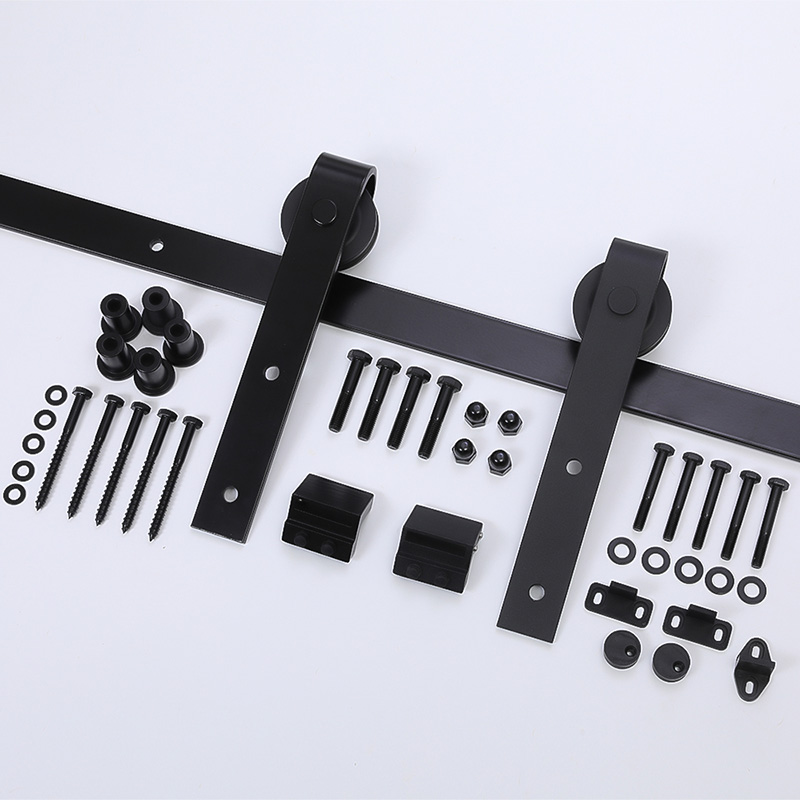
Tracks and rollers carry the panel while controlling its path. They also affect noise, opening force, alignment, and the action of soft-close parts. Current interior projects favour hidden hardware, flexible rooms, and quiet movement. That clean appearance makes planned inspection more important, especially when the working parts sit behind a fascia or inside a pocket.
The 2024 ANSI/BHMA sliding and folding door hardware overview reflects this focus. Its test areas include durability, smooth travel, friction, track jumping resistance, load, and finish.
Seven Door Track and Roller Wear Signs to Check
Do not judge the system by one symptom alone. Dirt can sound like bearing wear, while a loose guide may imitate a damaged roller. Open and close the door slowly, watch both ends of its travel, and inspect the accessible parts under good light. The following signs help separate a service task from a replacement decision.
1. Grinding, Clicking, or Rumbling Noise
A clean, correctly aligned door should move with a steady sound. Grinding can point to grit, a seized bearing, or metal-to-metal contact. Repeated clicking may come from a chipped wheel or a damaged section of track. Rumbling often suggests a rough bearing or a roller with a flat spot.
Remove loose debris with a soft brush or vacuum. If the sound remains after cleaning and alignment checks, examine the roller carriage. Replace a split wheel or rough bearing.
2. Grooves, Dents, and Raised Edges on the Track
Light polishing along the running line is normal. A deep groove is not. Dents can make the panel hop, while a raised edge may cut a polymer roller or push the carriage off line.
Small dirt marks can be cleaned. A sharp burr may require professional assessment, but a bent, cracked, or badly worn rail is normally a replacement issue. Fitting new rollers to a damaged track can ruin them quickly.
3. More Force Is Needed to Move the Door
Gradual resistance is one of the most useful door track and roller wear signs. The cause may be packed dust, a tight floor guide, poor alignment, loose hardware, or failing bearings. Compare the movement across the full travel. Resistance at one point suggests a local track or guide problem; resistance everywhere more often points to rollers, alignment, or excess load.
Do not keep pulling harder; that force reaches the hangers, fasteners, stops, and panel. Clean the path, then check clearances and fixings.
4. The Panel Drops, Tilts, or Rubs
An uneven floor gap, a leading edge that no longer meets the jamb, or fresh rub marks can signal movement at the hanger or roller. Adjustment may correct normal settlement. However, repeated loss of alignment can mean a loose carriage, worn wheel, distorted track, or weakened fixing point.
Support the door before touching suspension hardware. Qualified personnel should handle heavy or glass panels. Replace an adjuster that will not hold its setting.
5. Flat Spots, Cracks, or Side Play in a Roller
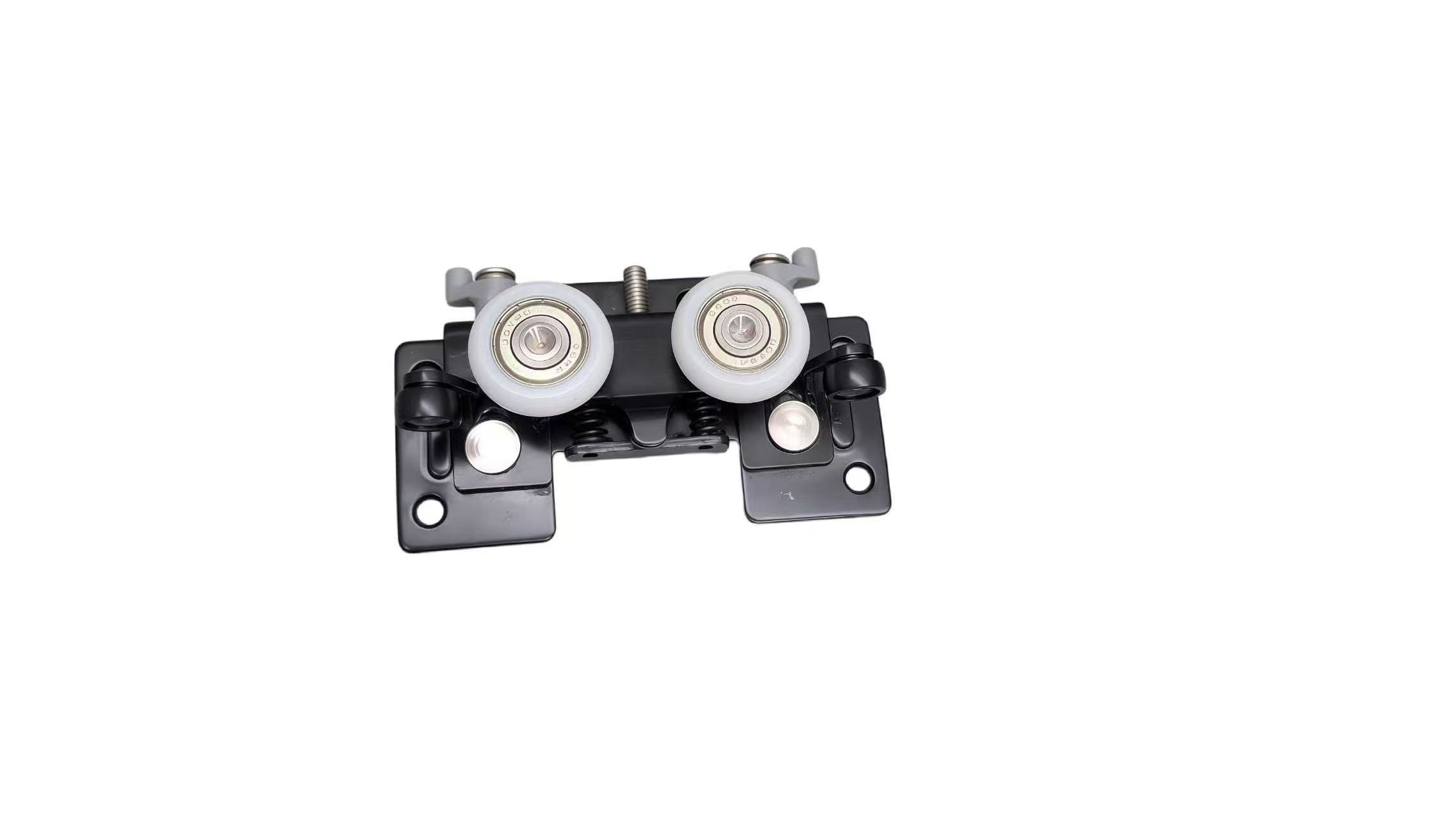
With the door safely supported, an accessible roller can be checked for cracking, uneven wear, wobble, and rough rotation. A wheel that slides instead of turning can develop a flat area. Excess side play may show bearing wear or a loose axle.
Replace a defective carriage with a compatible part, then inspect the matching roller and full track. One failed wheel may have shifted extra load.
6. Metal or Plastic Dust Below the Running Path
Fine particles show abrasion. Metal dust may come from a wheel rubbing a rail or bracket; plastic flakes may come from a guide insert or polymer roller.
Dust that returns after cleaning signals active wear. Look for mismatched components, a tight guide, a damaged rail, or an off-centre carriage. Replacement is usually due when a wheel, guide, or track has lost visible material.
7. Stops, Guides, or Soft-Close Parts No Longer Work Correctly
A loose guide allows the panel to swing. A worn stop may let it strike the frame. A soft closer that slams or fails to catch may be misaligned or worn.
Tightening or adjustment may restore a sound component. Cracked guides, hardened stop pads, bent triggers, and weak damping units should be replaced. Continued impact can send shock through the entire door system.
When Maintenance Is Enough
Maintenance suits structurally sound parts affected by dirt, normal settling, or a minor setting change. Follow the hardware instructions and avoid abrasive cleaners on coated or aluminium surfaces.
Remove hair, grit, and splinters from tracks, rollers, and floor guides.
Tighten accessible fasteners to the specified torque; do not overtighten them.
Reset roller height only within the designed adjustment range.
Align guides, stops, and soft-close triggers so they do not bind.
Use lubricant only where the manufacturer calls for it.
Record recurring noise, drift, or adjustment loss for comparison at the next check.
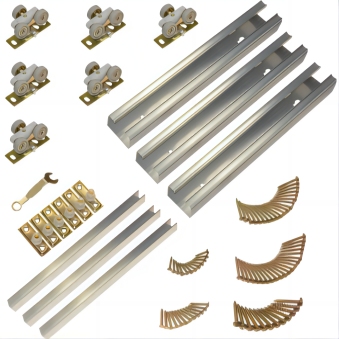
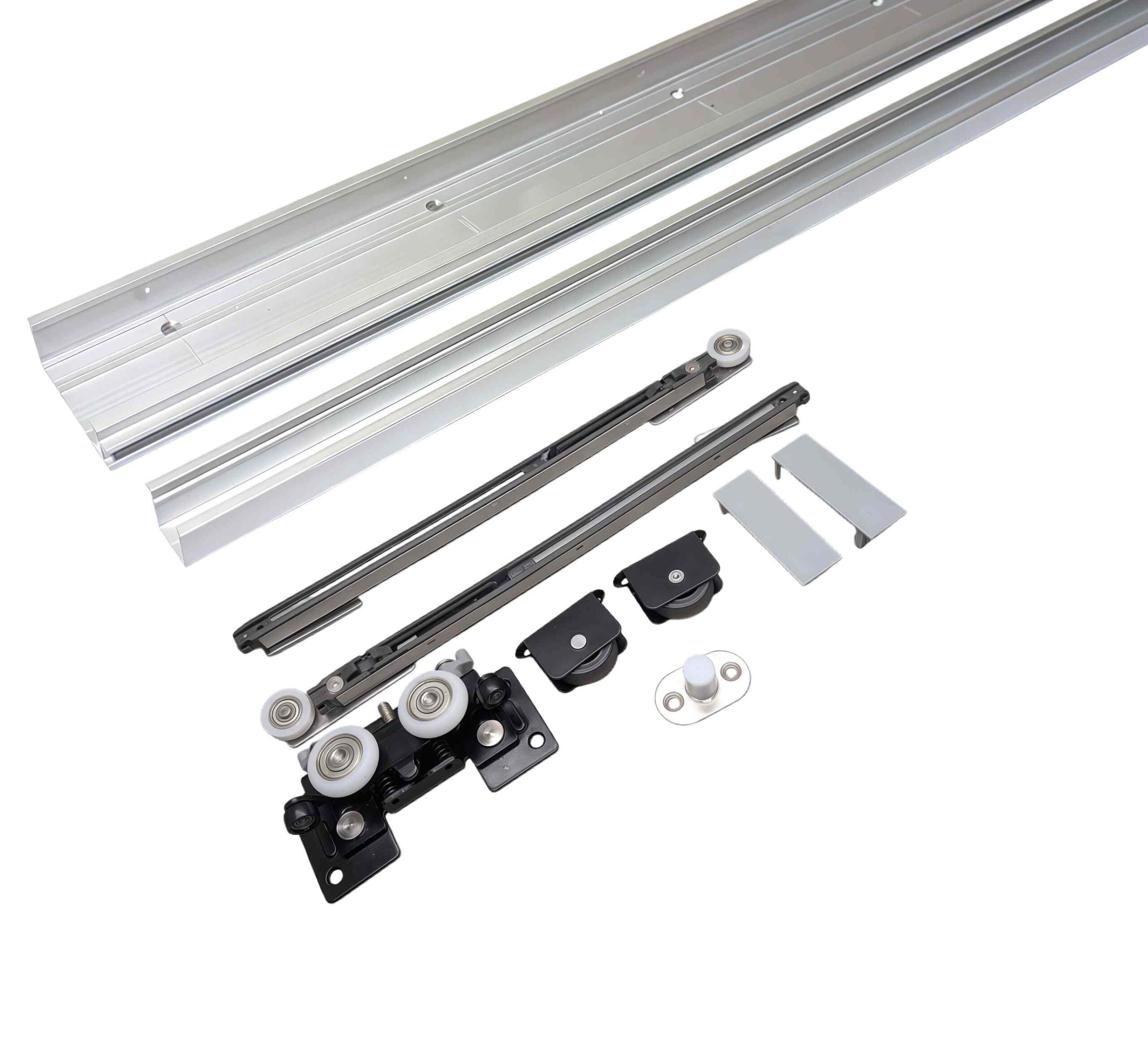
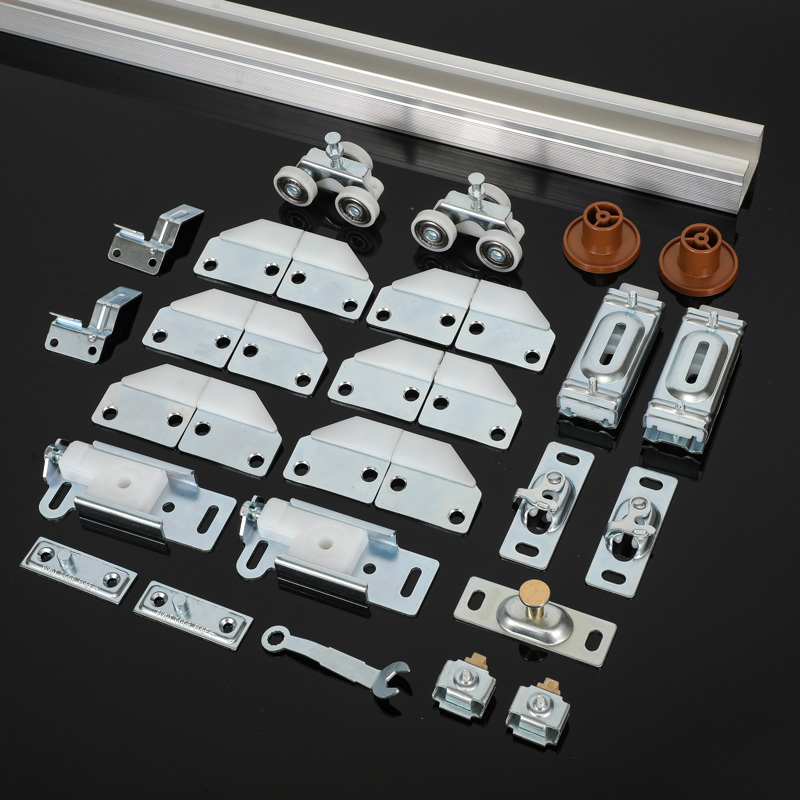
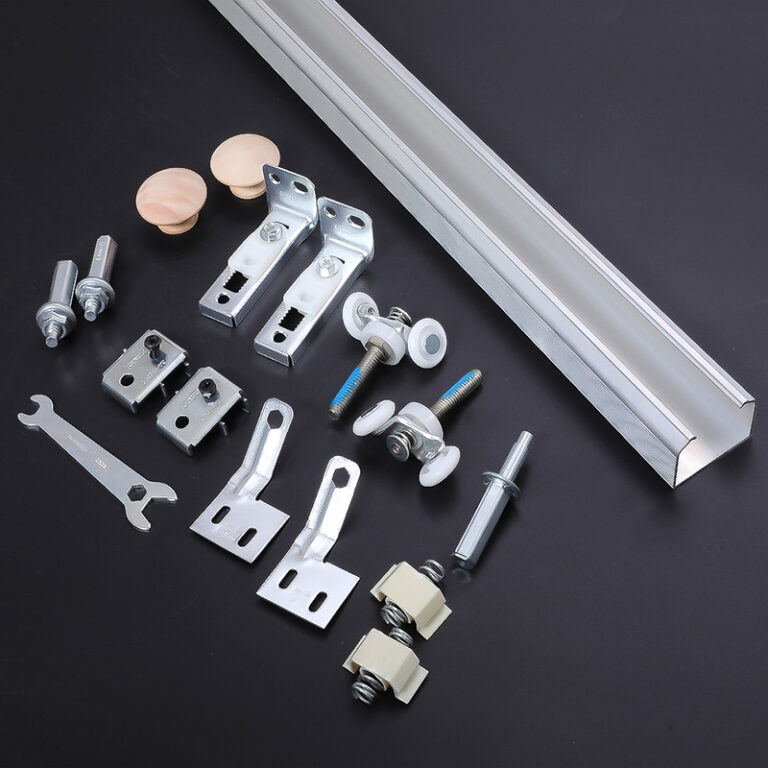
At INT-FORCE, we design door hardware as a compatible group of tracks, rollers, guides, stops, and closing parts. Our sliding door hardware covers bypass and multi-pass needs, while our hidden barn door systems suit projects that want a cleaner visual line. We recommend selecting and servicing parts by the exact model, door weight, panel thickness, and installation conditions.
When Replacement Is the Safer Choice
Replacement is due when wear changes a part’s shape, strength, or reliable action, or when maintenance brings only brief improvement. Do not pair an unknown roller with an existing rail merely because the dimensions look close.
Replace cracked, chipped, flat-spotted, or seized rollers.
Replace a track with deep grooves, cracks, severe corrosion, or permanent bends.
Replace a carriage with a loose axle or an adjuster that will not hold.
Replace worn anti-jump parts, guides, stops, and dampers that no longer perform their job.
Investigate the header and mounting points if fixings repeatedly loosen.
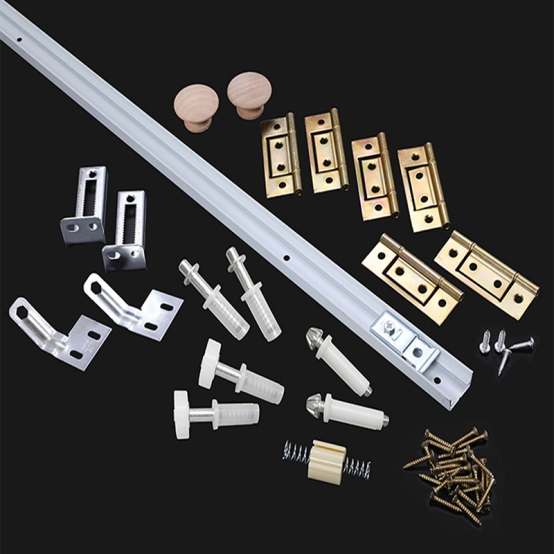
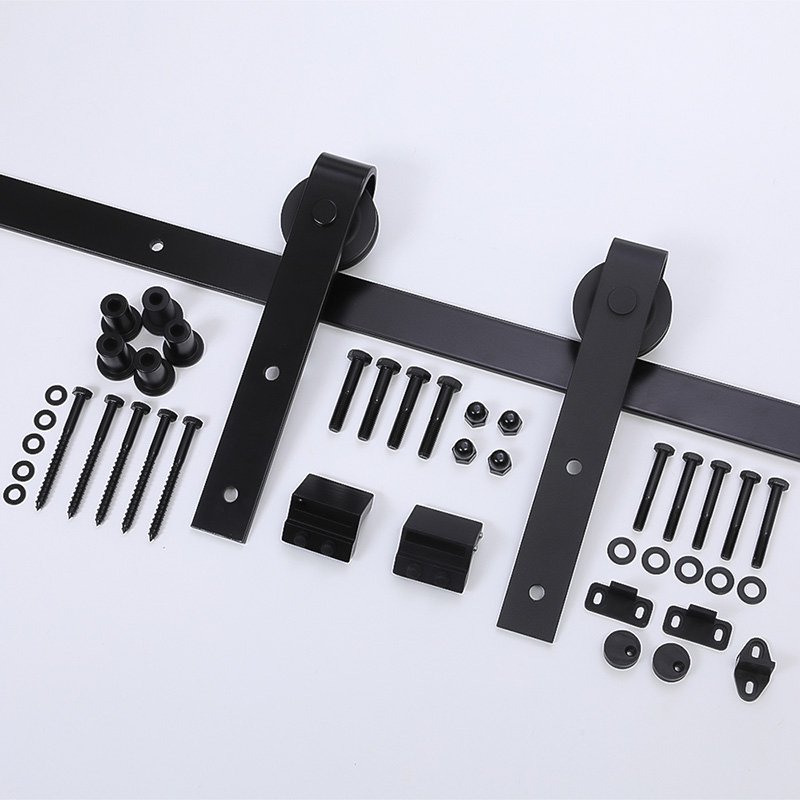
Door type affects access. A visible barn door system is usually easy to inspect. A pocket door system may require a planned access point, while bi-fold door hardware adds pivots and folding joints to the inspection. Repairability is now a stronger design concern, so access panels and replaceable parts deserve attention before walls and trim are closed.
A Practical Inspection Routine for Common Applications
Homes and apartments may need seasonal checks where pet hair, renovation dust, or frequent family use reaches the track. Hotels, offices, wardrobes, and shared interiors face higher cycle counts, so noise and opening effort should be reviewed more often. Workshops and light industrial spaces also need close attention to airborne grit.
Start with the door closed. Inspect the rail, wheel path, fasteners, guide, and stop. Move the panel halfway, then fully open it, noting changes in sound, effort, gap, and alignment. For a concealed system, remove only the intended service cover. Support the panel before touching load-bearing parts.
Conclusion
Door track and roller wear signs are most useful when read together. Noise, drag, dust, panel drop, wheel play, rail damage, and failed closing parts reveal where a system is losing smooth movement. Cleaning, tightening, and careful adjustment can correct debris or normal settling when every component remains sound. Cracks, deep grooves, seized bearings, flat spots, loose axles, and repeated alignment loss point toward replacement. Inspect the full hardware path rather than changing one obvious part in isolation. For concealed, pocket, barn, sliding, and bi-fold doors, future access is part of good hardware planning. A short check at the first change in sound or effort can protect the panel, the track, and the surrounding finish.
FAQs
These short answers cover the decisions readers most often face after spotting unusual movement. Because door weight, track material, roller design, and access differ, always compare the symptoms with the instructions for the exact hardware model before cleaning, adjustment, or replacement.
Q: What Are the Clearest Door Track and Roller Wear Signs?
A: Grinding, drag, deep grooves, wheel wobble, material dust, and repeated misalignment are the clearest signs.
Q: Can Noisy Sliding Door Rollers Be Cleaned Instead of Replaced?
A: Yes, if debris causes the noise and the cleaned rollers remain smooth, round, and firmly mounted.
Q: When Should a Damaged Door Track Be Replaced?
A: Replace it when cracks, deep grooves, severe corrosion, or permanent bends interrupt safe, smooth travel.
Tags:
No prev page
Previous Post