What Should a Sliding door constructor Consider When Matching Tracks to Door Weight?
-
 admin
- 09 Oct, 2026
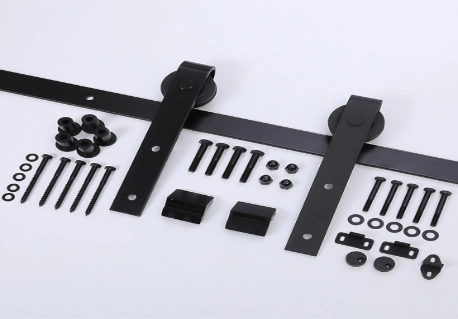
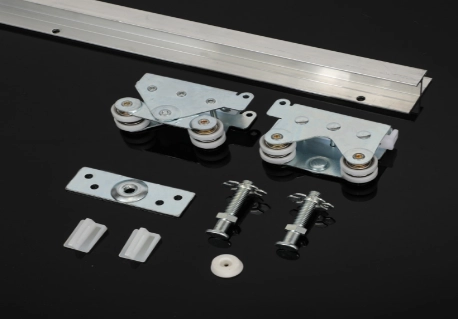
A sliding door can look simple after installation, but its load path is not. Panel weight passes through hangers, rollers, bearings, track walls, fasteners, and finally the building structure. If one part is chosen only by appearance or price, the door may sag, roll poorly, strike the floor, or wear early.
For a sliding door constructor, start with the real operating load, not the catalog label alone. Door material, width, thickness, usage frequency, mounting surface, and soft-close parts all affect the choice. This guide shows how to match sliding door track weight capacity to common systems, materials, applications, and current hardware trends.
Start With the Real Door Load, Not the Nominal Panel Weight
Confirm the finished door weight first. Include glass, mirrors, decorative skins, edge profiles, handles, locks, and other attached parts. A timber door and a glass-clad door of the same size can load the hardware very differently.
Also separate per-panel weight from total opening weight. A two-panel bypass system may put one panel on each hanger pair while the track and header carry both panels. In folding systems, pivots and guides also share the load.
Record these items before selection:
- Finished weight of each door in lb / kg.
- Door width, height, and thickness.
- Number of moving panels.
- Pocket, bypass, barn, bi-fold, or concealed layout.
- Expected daily cycles.
- Wall, header, ceiling, or frame material.
- Soft-close or multi-pass accessories.
At INT-FORCE, we make interior sliding-door rail guide systems and hardware across pocket, bi-fold, by-pass, barn, and hidden-door categories.
Track Material Changes How Weight Is Carried
Track material is not a shortcut to load capacity. A thick aluminum profile can outperform a thin steel channel in one design, while a formed steel track may be the better answer in another. The important questions are section shape, wall thickness, roller contact, fixing pattern, finish, and how the track is supported along its length.
Aluminum Tracks: Low Weight, Clean Profiles, and Good Corrosion Resistance
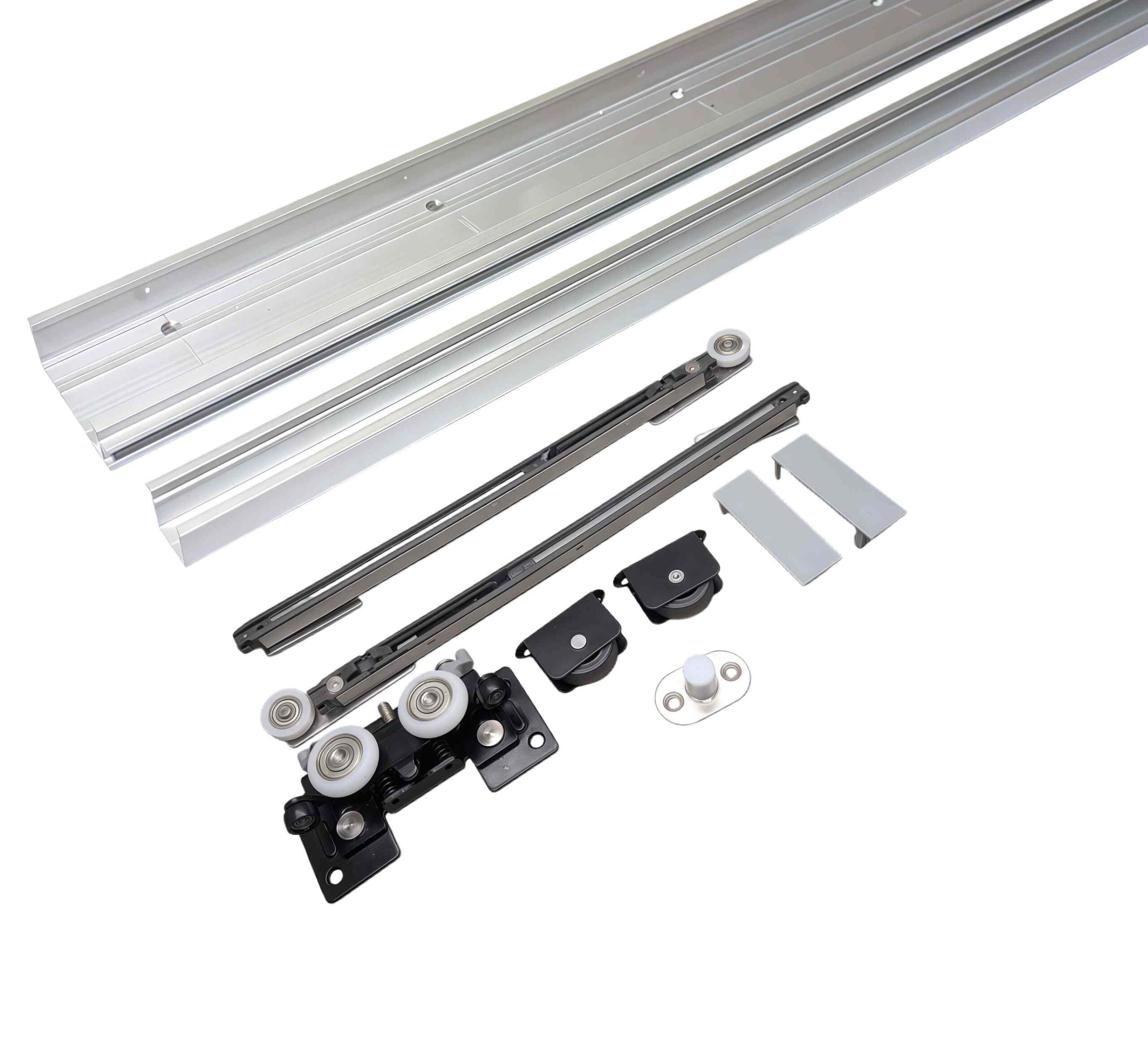
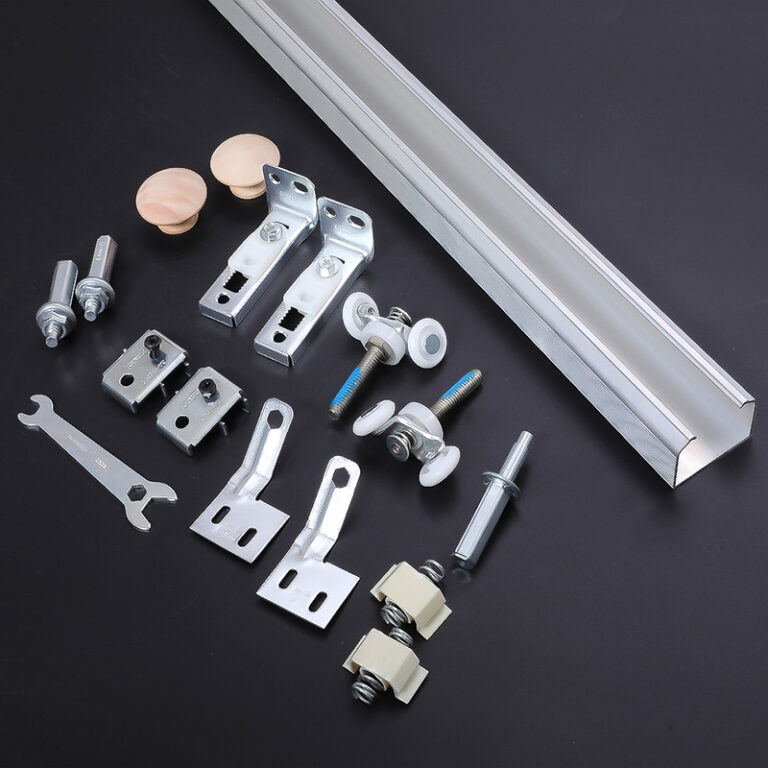
Extruded aluminum is common in pocket-door, multi-pass, and concealed systems because it can form accurate channels with smooth running surfaces. Its low mass also makes long sections easier to handle. Still, the profile needs enough depth, wall thickness, and fixing points to control deflection.
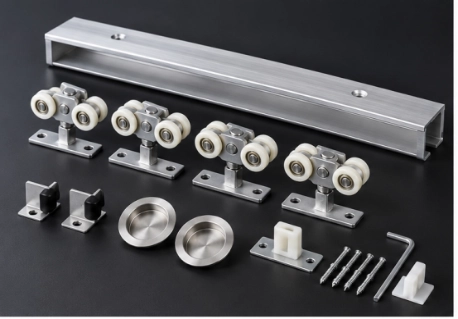
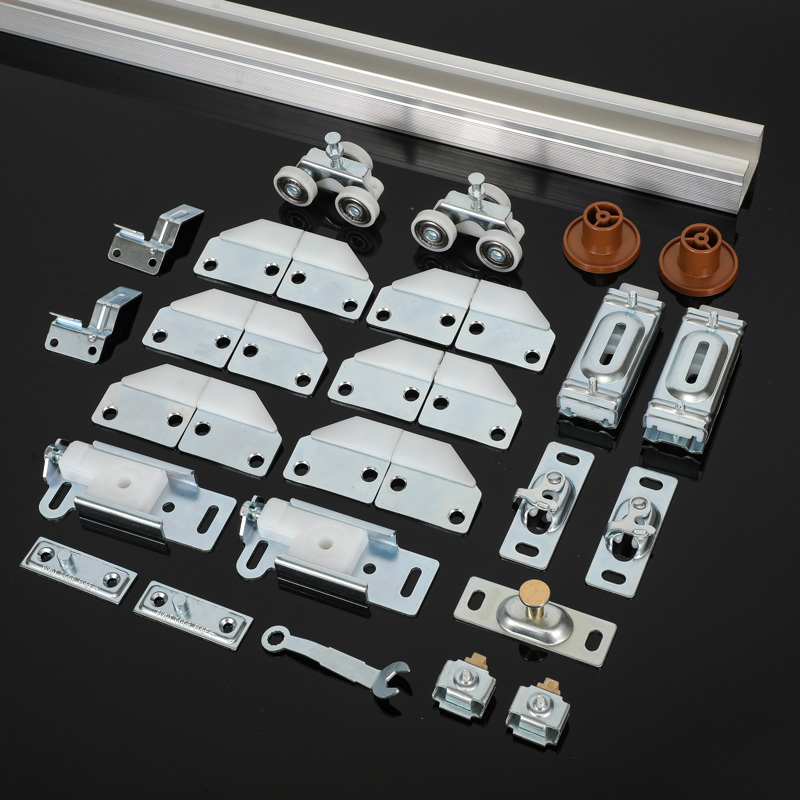
Our current 400 lb / 181 kg heavy-duty pocket-door track and hardware kit uses an aluminum track, while our 60 lb / 27 kg bypass kit uses a steel track. That contrast shows why material name alone does not define load class.
Steel and Stainless Options: Stiffness for Compact Tracks and Exposed Hardware
Steel tracks suit compact sections that need good stiffness, especially in closets, office partitions, and other interior openings. Formed steel can hold a narrow running path while remaining stable under repeated movement.
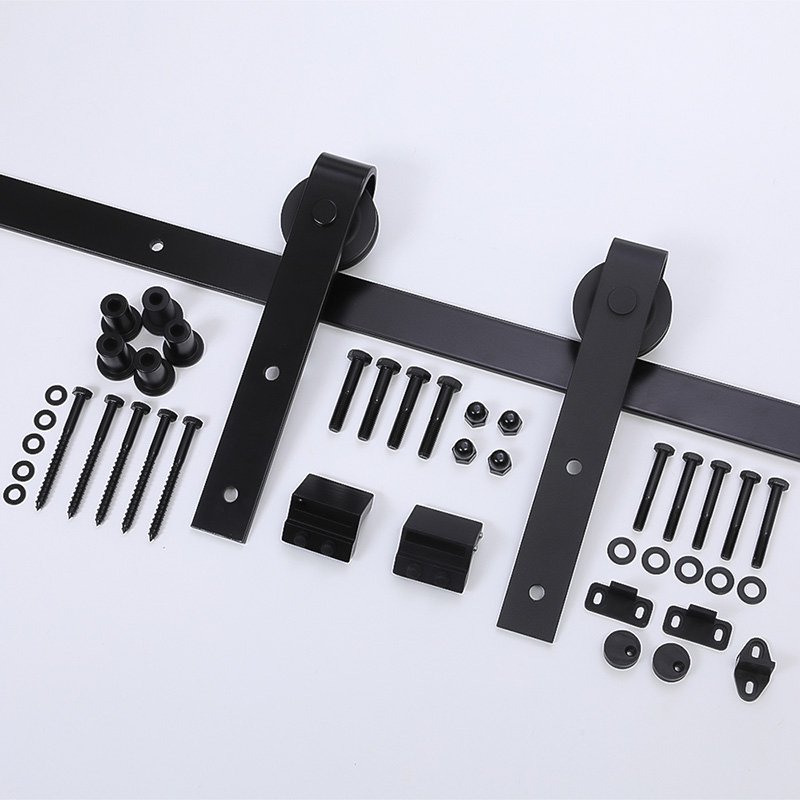
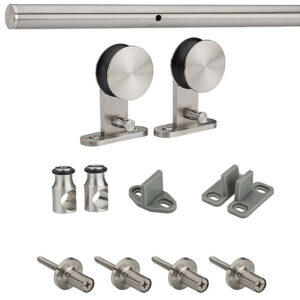
Stainless steel is useful when barn-door hardware remains exposed and finish durability matters. Whatever the metal, inspect the protective finish and running surface because corrosion or debris can increase noise and friction.
Match the Whole Hardware System, Not One Component
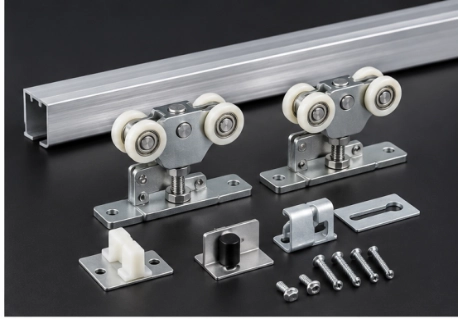
A track rating matters only when the trolley, hanger, guide, stop, fasteners, and support structure are compatible. The weakest part defines the real limit. A heavy-duty rail fixed into weak blocking is not a heavy-duty installation.
Check four interfaces:
- Roller to track: wheel diameter, bearings, and contact shape affect friction and point loading.
- Hanger to door: hollow cores, thin skins, and glass adapters may need reinforcement.
- Track to structure: anchors and brackets must transfer the rated load into sound material.
- Stop or soft-close to moving mass: heavier doors create more momentum at the end of travel.
Do not mix unrelated tracks, trolleys, and dampers simply because their dimensions appear similar.
Product Classes Help Narrow the Right Weight Range
Weight classes are useful for the first selection pass, but they should not be treated as universal categories. Different door styles place the load into the hardware in different ways. Use the following ranges as a practical way to organize projects, then confirm the exact rating, door dimensions, and installation requirements for the chosen system.
Light-Duty Systems for Closets, Cabinets, and Small Panels
The 30-75 lb / 14-34 kg range is common for smaller bi-fold and bypass panels. Typical uses include closets, wardrobes, light room dividers, and furniture-scale doors. Alignment and panel width often matter as much as weight.
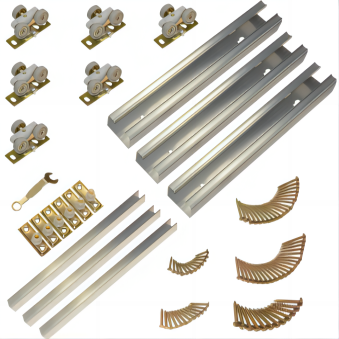
Our bi-fold options include 30 lb, 50 lb, 75 lb, and 125 lb classes, while our barn-door range includes configurations around 200-220 lb / 91-100 kg.
Mid-Range Systems for Residential and Commercial Interiors
The 80-220 lb / 36-100 kg range covers many full-size interior doors, barn doors, thicker timber panels, and some hidden-door applications. Track stiffness, bearing quality, and header fixing become more important as panel size grows.
Concealed systems in this range suit projects that want a clean wall line with little visible hardware, but they also require careful alignment and clearance control.
Heavy-Duty Systems for Large, Dense, or Multi-Layer Doors
At 250-400 lb / 113-181 kg, treat the opening as a system-engineering task. Heavy timber, acoustic cores, decorative layers, and dense composite doors can reach this range quickly. Static load on the header and impact at the end of travel are much higher.
A 400 lb / 181 kg pocket-door system can be suitable for heavy panels, but the wall pocket, frame, jamb, and fixings must support the same load class.
Application Changes the Required Service Life
Two doors with the same weight may need different hardware because they are used differently. A bedroom pocket door may move only a few times a day. A restaurant or office partition can cycle far more often.
Common applications include:
- Residential interiors:pocket doors, barn doors, closets, hidden doors, and room dividers.
- Offices and commercial fit-outs: bypass and multi-panel systems need stable alignment and service access.
- Hospitality and restaurants: frequent use puts more demand on rollers, dampers, stops, and finishes.
- Retail and showrooms: concealed or barn-style systems may carry large decorative panels.
- Millwork and furniture: lighter panels still need accurate clearances and guides.
For project buyers, we ask for door width, height, wall thickness, volume, packaging needs, and any test requirements before recommending a system.
Current Industry Focus: Concealed Hardware, Heavier Panels, and Verified Performance
Recent architectural hardware coverage has emphasized concealed tracks, clean sightlines, and quiet controlled motion. Large-format doors and heavier panels are also becoming more common in design-led projects. Both trends make accurate load matching more critical.
Performance standards are also moving attention beyond one weight number. ANSI/BHMA A156.14-2024 includes cycle, abuse, durability, static-load, smoothness, and friction tests for sliding and folding hardware. The 2026 draft ISO/DIS 26279 also focuses on strength and durability testing for sliding fittings.
For constructors, the useful question is not only “What is the maximum weight?” but also “How was that rating tested?”
A Practical Track-to-Weight Checklist for Constructors
Before releasing an order, check the complete load path:
- Weigh the finished door, not the unfinished slab.
- Confirm whether the rating is per panel, trolley pair, or opening.
- Match door thickness and width to the hanger geometry.
- Check track material, section, length, and fixing spacing.
- Confirm the header or frame can take the static load.
- Rate guides, stops, and soft-close parts for the same moving mass.
- Consider cycle frequency, corrosion exposure, and maintenance access.
- Install the track level and keep clearances within the hardware instructions.
This makes sliding door track weight capacity a full design decision instead of a number copied from a label.
Conclusion
Matching a sliding door track to door weight starts with the finished panel, but it does not end there. Material, track section, trolley design, fixing method, door geometry, operating frequency, and soft-close parts all influence performance. Aluminum, steel, and stainless solutions each have strengths in the right structure. Pocket, bypass, bi-fold, barn, and hidden doors also distribute load differently. For constructors, the best method is to select a tested hardware class, verify every component in the load path, and confirm the building support before installation. That discipline reduces noise, adjustment problems, premature wear, and costly call-backs.
FAQs
Q: What sliding door track weight capacity is suitable for a 60 lb / 27 kg door?
A: Choose a system rated above 60 lb / 27 kg, then verify hangers, guides, fasteners, and structural support.
Q: Can a 400 lb / 181 kg pocket-door track carry a lighter panel?
A: Yes, when door thickness, hanger geometry, stops, frame support, and installation method all match the kit.
Q: Is a 150 lb / 68 kg hidden track automatically safe for every 150 lb / 68 kg door?
A: No. Door width, fasteners, structure, roller design, soft-close parts, and cycle demand still matter.
Tags: